Inhalt

Die Zulassung zu Ihrem ersten Partnerprogramm ist wie ein Rausch. Man meldet sich bei der Plattform an, fängt an, die Produkte zu durchstöbern und Links für alles zu sammeln, was man bewerben möchte, und schon bald hat man eine solide Liste.
Ihr nächster Instinkt könnte sein, diese Affiliate-Links in Ihre Blog-Artikel, Social Posts und DMs einzubauen - denn wenn sie erst einmal da sind, müssen Sie sich nur noch zurücklehnen und auf die Klicks und Provisionen warten, die Sie erhalten.
Und diese ganze Affiliate-Marketing-Sache entpuppt sich als so einfach, wie es klingt. Rechts? Nicht ganz.
Hinter Affiliate-Links steckt viel mehr, als den meisten Anfängern bewusst ist - und je mehr Sie darüber wissen, was sie sind, wie sie funktionieren und warum sie so aussehen, wie sie es tun, desto besser werden Sie bei der Werbung für sie sein.
Denn wenn Sie erst einmal sehen, was wirklich in einem Affiliate-Link steckt, wird es ziemlich offensichtlich, warum es nicht das Beste ist, ihn einfach so zu teilen.
Was ist ein Partnerlink?
Ein Affiliate-Link ist eine eindeutige URL, die Ihnen speziell von einem Händler oder Partnernetzwerk.
Beispiel Affiliate Link:
https://www.example-store.com/product/wireless-headphones?ref=yourname
Siehe die Zeichenkette nach dem ? - Das nennt man eine Abfragezeichenfolge, und macht Ihren Link zu einem Tracking-Mechanismus. Das bedeutet Folgendes:
- ref=yourname - Dies ist Ihre in den Link eingebettete Partner-ID. Jedes Mal, wenn jemand klickt und einen Kauf tätigt, liest das Tracking-System des Händlers diesen Parameter, um festzustellen, wer den Verkauf vermittelt hat, und um sicherzustellen, dass Sie dafür bezahlt werden.
Die meisten Partner fügen auch ihr eigenes Tracking ein, was den Link in etwas Ähnliches verwandelt:
https://www.example-store.com/product/wireless-headphones?ref=yourname&utm_source=blog&utm_medium=affiliate&utm_campaign=spring2025
Diese zusätzlichen Parameter - wie utm_source, utm_mediumund Utm_-Kampagne - sind unglaublich nützlich zu sehen woher Ihre Klicks kommen, Sie sind aber auch der Grund dafür, dass Affiliate-Links den berüchtigten Ruf haben, lang und verdächtig auszusehen.
Die Viele Probleme mit Affiliate-Links
Diese lange, verdächtig aussehende URL ist nur der Anfang des Problems. Nicht verwaltete Affiliate-Links bringen eine ganze Reihe von Problemen mit sich, die Ihrer Glaubwürdigkeit, Ihren Konversionen und sogar Ihren Provisionen schaden können.
- Sie wirken nicht vertrauenswürdig. Die Verbraucher sind vorsichtiger geworden, wenn es darum geht, was sie online anklicken, und eine lange Reihe von Parametern und Tracking-Codes schreit nicht gerade nach “vertrauenswürdiger Produktempfehlung”.
Für viele Leser sieht es so aus, als würde man jede ihrer Bewegungen verfolgen, sobald sie darauf klicken - und allein dieses Zögern reicht schon aus, um Ihnen den Kauf zu verleiden. - Sie sind zerbrechlich. Sowohl Partnerprogramme als auch Händler sind dafür bekannt, dass sie ihre Websites umstrukturieren, ihre Tracking-Systeme aktualisieren, ihre URL-Formate ändern oder ihre Programme ganz einstellen.
Wenn etwas davon passiert und sich auf den Affiliate-Link auswirkt, den Sie in Dutzenden von Blogbeiträgen eingebettet haben, geht jede einzelne dieser Platzierungen verloren - und es gibt keine schnelle Lösung. Sie müssen sie manuell aufspüren, einen nach dem anderen, für jeden Inhalt, den Sie jemals veröffentlicht haben. - Es ist unmöglich, mit ihnen zu arbeiten, besonders im sozialen Bereich. Eine Partner-URL mit all ihren Parametern ist einfach zu lang, um sie außerhalb eines Hyperlinks sauber zu teilen.
Fügen Sie es in eine X-Beschriftung ein, und es verschlingt die Hälfte Ihrer Zeichenanzahl. Fügen Sie es in einen Blogbeitrag oder ein ebook ein, und es erstreckt sich über drei Zeilen. Und versuchen Sie gar nicht erst, ihn in einem Podcast laut vorzulesen - Ihr Publikum wäre längst eingeschlafen, bevor Sie die URL zu Ende gesprochen hätten. - Sie verraten Ihre Strategie. In dem Moment, in dem ein Leser die ref=journame&utm_campaign=top10review, Sie wissen, dass es sich um einen Werbelink irgendeiner Art handelt. Das ist nicht unbedingt etwas Schlechtes - deshalb haben wir ja die Offenlegung.
Aber wenn Sie sich nicht einmal darum kümmern, Ihre Links professionell zu präsentieren oder die Erfahrungen Ihrer Leser zu berücksichtigen, bekommen die Leute den Eindruck, dass es Ihnen nur um das schnelle Geld geht. Das ist nicht der Ruf, den Sie sich wünschen. - Sie sind viel leichter zu kapern. Affiliate-Link-Hijacking liegt vor, wenn Leute Browsererweiterungen und Skripte verwenden, um heimlich Ihre Affiliate-ID mit ihrer zu vertauschen, kurz bevor der Klick registriert wird.
Sie machen die ganze Arbeit, um den Verkehr zu steuern, und jemand anderes bekommt die Provision. Sie werden nicht benachrichtigt. Es gibt keine offensichtlichen Anzeichen dafür, dass etwas schief gelaufen ist. Sie sehen einfach nie die Auszahlung.
Nach Angaben von Wir können verfolgen Schätzungen zufolge gehen jeden Monat rund 17% an Affiliate-Provisionen durch betrügerische Aktivitäten verloren!
Das bedeutet nicht, dass Ihre Affiliate-Links nicht konvertieren werden, aber Sie werden definitiv nicht die Ergebnisse erzielen, die Sie erzielen könnten. Und wenn Sie das sehr reale Risiko einkalkulieren, Provisionen zu verlieren Entführung, Die Kosten des Nichtstuns summieren sich ziemlich schnell.
Fix Ihre Affiliate-Links mit ThirstyAffiliates Link Cloaking
Ich gebe zu, dass derjenige, der sich den Begriff “Link Cloaking” ausgedacht hat, wahrscheinlich etwas länger darüber hätte nachdenken sollen - denn er klingt viel dubioser, als er tatsächlich ist.
Link-Cloaking geht es nicht darum zu verbergen, dass Sie ein Partner sind. Es geht vielmehr darum, die lange, unübersichtliche Tracking-URL durch eine kurze, saubere, markengeschützte Version zu ersetzen, die tatsächlich auf Sie zurückverweist.
Anstatt zu teilen:
https://www.example-store.com/product/wireless-headphones?ref=yourname&utm_source=blog
Sie teilen einen getarnten Link, der wie folgt aussieht:
https://yoursite.com/recommends/wireless-headphones
ThirstyAffiliates ist ein WordPress-Plugin wurde speziell für Affiliate-Vermarkter entwickelt, und Link Cloaking ist das Herzstück der Software.
Sie laden einfach Ihre dem Netzwerk zugewiesenen Affiliate-Links in das Dashboard des Plugins hoch und passen dann jeden einzelnen mit einem sauberen Slug an - z. B. /empfiehlt/Produktname.
ThirstyAffiliates rebrandet zusätzlich den Link selbst, indem es die Domain des Händlers durch Ihre eigene ersetzt, so dass jeder Link, den Sie teilen, wie eine echte Reflexion Ihrer Marke aussieht und nicht wie ein Umweg über das Tracking-System eines anderen.
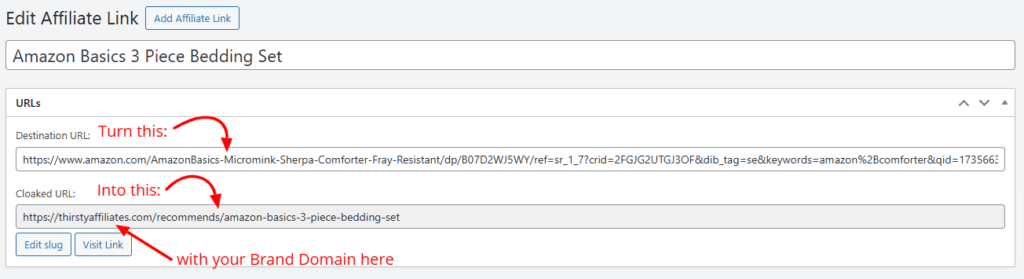
Jetzt haben Sie einen sauberen Link, den Sie weitergeben können, und Ihr Publikum erhält vom ersten Klick an ein ausgefeiltes Erlebnis, bei dem es sofort und unsichtbar an die ursprüngliche Partner-URL weitergeleitet wird - mit allen Parametern -, so dass das Tracking des Händlers vollständig intakt bleibt.
Das Ganze geschieht in einem Bruchteil einer Sekunde und entspricht dennoch allen Compliance-Vorschriften. Der Händler erhält seine Daten. Sie erhalten die Gutschrift. Der Leser bekommt ein cooles neues Produkt gekauft. Affiliate Marketing vom Feinsten.
Es gibt einen anderen Weg, Affiliate-Links zu verschleiern - und es konvertiert besser
Cloaking bereinigt das Aussehen Ihrer Links im Text - aber es gibt noch eine zweite Möglichkeit, Affiliate-Links mit ThirstyAffiliates zu präsentieren, die das ganze Erlebnis in Bezug auf die Konversionen noch weiter verbessert.
Produkt-Displays sind visuelle Schaukästen, die Sie direkt in Ihren Inhalt einbetten. Anstelle eines Textankers mit Hyperlink sieht Ihr Leser eine vollständige Produktkarte: ein Produktbild, eine Beschreibung, Preisinformationen, eine anpassbare CTA-Schaltfläche und sogar ein optionales Abzeichen wie “Bestseller” oder “Editor's Pick”.”
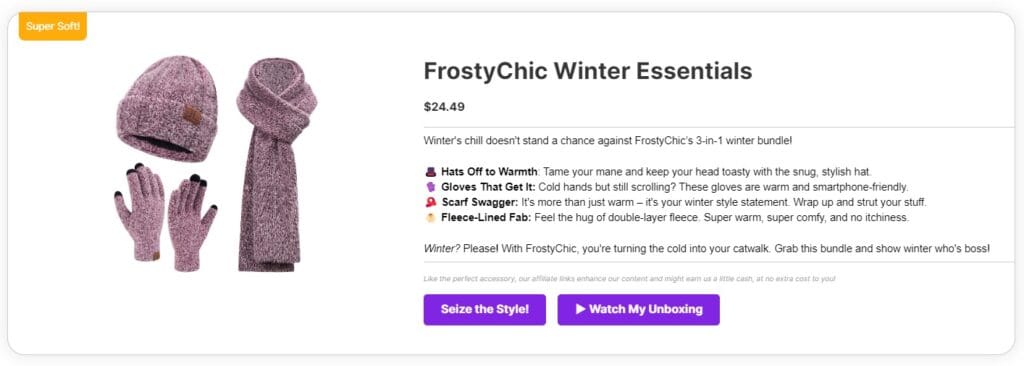
Der Affiliate-Link ist immer noch da - er befindet sich nur in einer ausgefeilten Anzeige, die wie ein echtes Einkaufserlebnis aussieht und nicht wie ein Textlink, der mitten im Absatz versteckt ist.
Das ist der Grund, warum das wichtig ist: Menschen kaufen Dinge, die sie sehen können. Ein einfacher Textlink, der die Leser auffordert, “diese Kopfhörer auszuprobieren”, erfordert viel Vorstellungskraft von ihnen.
Eine Produktanzeige, die das Bild zeigt, den Preis nennt und eine Schaltfläche “Jetzt kaufen” direkt vor dem Kunden platziert? Das ist ein viel einfacheres Ja.
Die Weitergabe eines getarnten Affiliate-Links ist nur der Anfang
Das Ändern des Aussehens Ihrer Links ist nur ein Teil der Verwaltung von Affiliate-Links. ThirstyAffiliates gibt Ihnen ein komplettes Set an Tools an die Hand, um alles zu organisieren, nachzuverfolgen und so gut wie möglich für Ihr Unternehmen zu arbeiten. Partnergeschäft.
Sie können Organisieren Sie Ihre Links nach Kategorien innen ThirstyAffiliates - nach Thema, Nische, Händler oder wie immer es für Ihre Arbeitsweise sinnvoll ist.
Wenn Sie für Produkte in verschiedenen mehrere Programme, Wenn Sie Ihre Links gruppieren und beschriften, ist es wesentlich einfacher, alles zu verwalten, wenn Ihre Bibliothek wächst.
Ein gut organisiertes Link-Dashboard gehört zu den Dingen, die nicht wichtig erscheinen, wenn Sie 12 Links haben - aber absolut notwendig werden, wenn Sie 2.000 haben.
Jeder Link in Ihrem ThirstyAffiliates-Dashboard verfügt außerdem über integrierte Klickverfolgung, So können Sie genau sehen, welche Links angeklickt werden und welche nicht - ein separates Analysetool ist nicht erforderlich. Ich empfehle allerdings, sich die MonsterInsights.
Im Laufe der Zeit können Sie anhand dieser Daten herausfinden, welche Produkte es wert sind, stärker hervorgehoben zu werden, welche Artikel aktualisiert werden sollten und wo Sie mehr Affiliate-Placements hinzufügen sollten.
Und wenn Sie Produktanzeigen verwenden, sind diese auch auf der Ebene der Partnerlinks verwaltet - Das bedeutet, dass jede Anzeige direkt mit ihrem getarnten Link verknüpft ist, in Kategorien gruppiert werden kann und auf dieselbe Weise verfolgt wird. Alles an einem Ort, alle arbeiten zusammen.
Schlussfolgerung
Partnerlinks sind viel mehr als nur eine URL zum Kopieren und Einfügen - und jetzt wissen Sie, was auf dem Spiel steht, wenn Sie sie nicht richtig verwalten.
Der Einstieg in ThirstyAffiliates bedeutet, dass Sie von nun an Ihre Linkbibliothek auf die richtige Weise aufbauen können.
Wenn Sie neue Affiliate-Produktlinks in das Plugin einfügen, schalten Sie sie sofort unkenntlich. Haben Sie bereits einige Links in Ihrem Inhalt verstreut? Einfach sie in ThirstyAffilates importieren und sie mit ein paar Klicks massenhaft tarnen.
Von da an müssen Sie sie nur noch in Ihrem eigenen Tempo durcharbeiten - sie für die Organisation kategorisieren, diejenigen, die von einer visuelleren Präsentation profitieren würden, in Produktanzeigen umwandeln und die integrierte Nachverfolgung ihre Arbeit tun lassen, damit Sie immer wissen, was funktioniert und was nicht.
Mit ThirstyAffiliates können Sie nicht mehr nur auf Affiliate-Links verzichten und die Daumen drücken, sondern jeden einzelnen Link, den Sie setzen, mit Bedacht wählen - und darauf vertrauen, dass Sie die Conversion bekommen.