
Contents
You already know something shifted. You can see it in the same report you’ve been pulling for years: the keyword still ranks, the position held, the impressions are roughly where they were, and yet, the clicks coming off that page are down.
Not down because you slipped to the second page. Down because Google answered the question before anyone ever reached your link.
That’s the part that makes this moment different from every algorithm update you’ve weathered before. This isn’t a ranking problem you can fix by tightening your on-page SEO.
AI Overviews and Google’s AI Mode are changing what a top ranking is even worth, because a growing share of your audience now gets what they came for without leaving the results page.
For a lot of affiliates, the instinct is to treat that as a straight loss and start chasing the volume back. I’d argue that’s the wrong read.
The clicks that still make it through to your site, especially the ones arriving from AI engines, aren’t the same traffic you were getting in 2023. They’re fewer, and they convert far harder.
Once you accept that trade, the whole game changes from getting more people to your links to making sure you never lose the high-value ones you’ve already earned.
In this article, we’re covering why your traffic is sliding even when your rankings aren’t, why those surviving clicks are worth more than the ones you lost, what actually changes about how you work, and how to stop leaking the high-intent clicks you’re still earning before they cost you the commission.
Why Your Affiliate Traffic is Sliding Even When Your Rankings Hold
Your traffic is dropping because Google stopped sending as many people past the results page.
AI Overviews sit at the top of the page and answer the query directly, and AI Mode goes further, running a full conversational search that assembles its own product shortlist without handing the user off to anyone’s article.
The ranking you fought for is still there. It’s just further down a page most people no longer need to scroll.
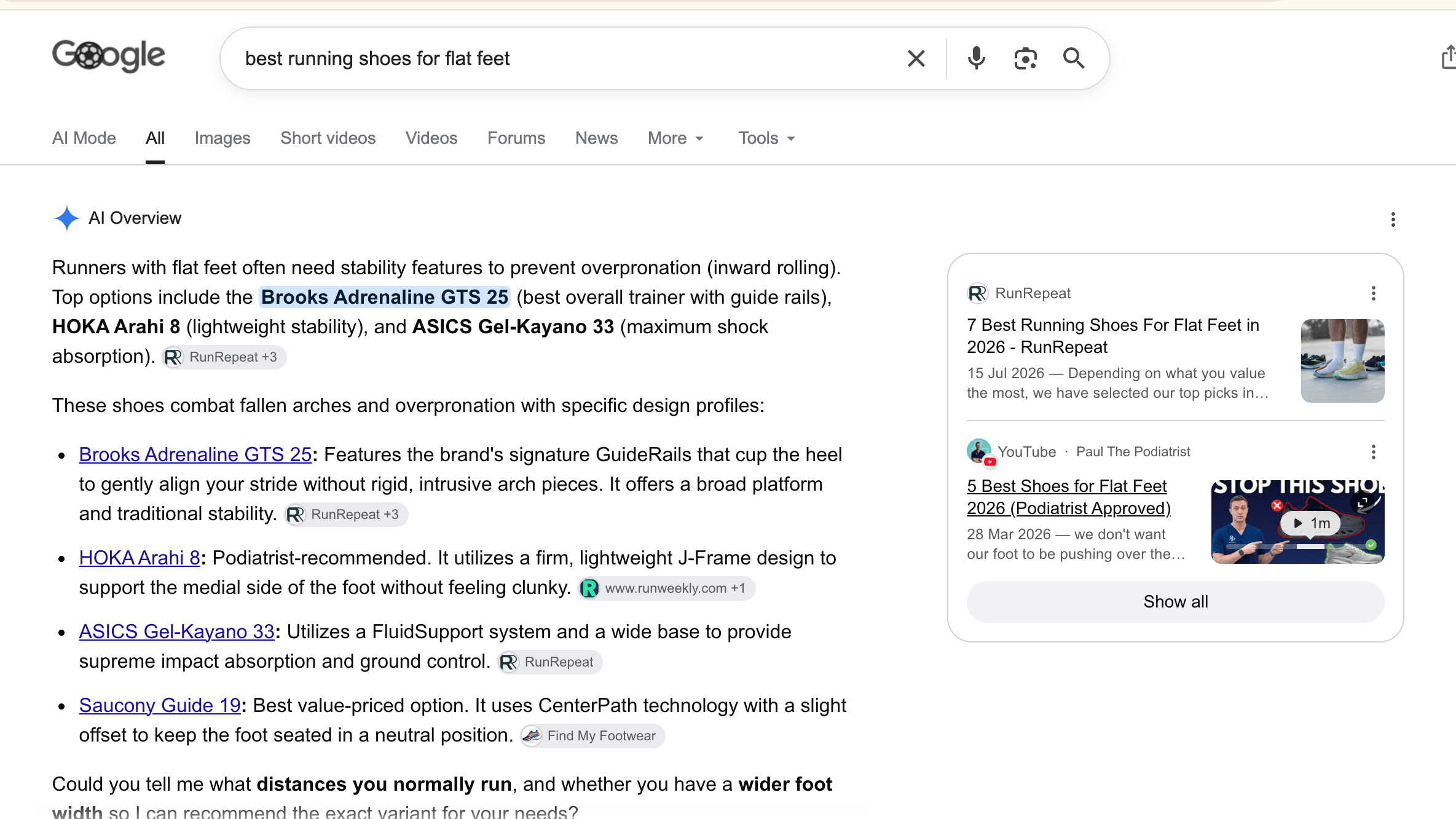
New data from Digital Content Next found that AI Overviews were linked to as much as a 25% decrease in publisher referral traffic.
And this isn’t hitting only small sites. Between May and August 2025, Wirecutter, one of the most established review publishers on the web, saw its Google search visibility drop by more than 60%.
When a property that size takes that kind of hit, it’s not a niche-level fluke. It’s the channel itself changing shape.
Affiliates feel it acutely because so much of the model was built on organic search sending buyer-intent readers to review and comparison content. Pull a chunk of that volume out and the whole funnel gets thinner at the top.
It’s no surprise that close to 7 in 10 publishers report being concerned or very concerned that Google’s changes will hurt their affiliate business.
Here’s the trap, though. A broken affiliate link used to be a rounding error, one dead link lost in a flood of clicks you’d catch eventually.
Now every click is scarcer and more valuable, so the same broken link bleeds commission you can’t afford to lose. Catching those before they cost you a sale is no longer maintenance. It’s protecting revenue.
Protect every affiliate click. ThirstyAffiliates’ Automatic 404 Checker flags broken and redirecting affiliate links, so valuable clicks don’t end at a dead page.
The Part Most Affiliates Miss About Those Fewer Clicks
The clicks arriving from AI search can be worth more per visit than the ones you lost, and that’s the whole reframe.
When someone lands on your page after asking an AI engine a real buying question, the AI has already done the early-funnel work for them. It compared options, summarized the tradeoffs, and narrowed the field.
The behavior data makes the point plainly. Consumers using generative AI are reaching for it to handle the exact jobs affiliate content was built around, such as price comparison, deal finding, and review checking.
That difference in intent shows up in conversion rate, not just vibes. It’s reasonable to expect AI-referred visitors to convert at a higher rate than standard organic traffic, though how big that gap is will vary by audience and business model.
The mechanism is one you already understand intuitively: fewer visitors and more people arriving with a clearer idea of what they want because much of the browsing happened before the click.
So the affiliate still measuring success by raw sessions is reading the wrong number. Fewer clicks with stronger buying intent can outperform the higher-volume, lower-intent traffic of two years ago.
The affiliate who accepts that and builds around it comes out ahead of the one still grieving the old dashboard.
What This Changes About How You Work Day to Day
In practice, your attention moves from chasing volume to protecting and understanding intent.
That plays out in 3 places:
- What content you build,
- Whether AI engines can see you, and
- How closely you track the traffic you have left
Start with the content, because AI Mode has changed what wins. When it builds a product shortlist itself, the generic “best budget headphones” listicle loses its reason to exist, because the AI just wrote that list without you.
What holds up is content the AI can’t easily synthesize on its own: segmented “best for” pages aimed at a specific use case, real hands-on testing, and genuine comparison work.
A page like “best noise-canceling headphones for open-plan offices” survives because it answers a sharper question than the model wants to answer from scratch, and it gives the AI something concrete and specific to cite.
That word, cite, is the second piece. Getting surfaced inside AI answers isn’t a lost cause for affiliates. It’s arguably the opposite.
Your reviews and comparisons are exactly what these engines reach for when they answer a shopping question. Structure your pages so they’re easy to extract from, lead with the direct answer, and you stay in the citation pool that feeds the shortlist.
The third piece is tracking, and it gets harder right when it matters most. AI referrals don’t announce themselves cleanly in analytics the way a Google click does, and a lot of that traffic lands in your reports mislabeled.
If you can’t see which of your clicks are actually earning, you can’t double down on the right pages. Attribution stops being a nice-to-have and becomes the thing that tells you where to put your energy.
Know which links are earning. ThirstyAffiliates Click Tracking shows which affiliate links are getting clicked, helping you see where your strongest opportunities are.
How to Stop Leaking the High-Intent Clicks You Still Earn
When your traffic profile gets smaller, every link on your site has to pull more weight, and the infrastructure underneath those links is what decides whether a high-intent click turns into a paid commission or slips through a crack.
This is the job ThirstyAffiliates was built for, and it’s worth walking through how I actually use it once traffic tightens up.
The first thing I lock down is cloaking. A buyer arriving from an AI answer is already in a more skeptical, more deliberate frame of mind, and a raw affiliate URL stuffed with ?ref= and tracking parameters reads as exactly what it is.
I cloak every link so it shows up as a clean, branded redirect off my own domain, something like yoursite.com/recommends/product-name.
It looks like part of my site because it is, and it holds up to the closer look a high-intent reader gives before they commit. Cloaking also makes links far harder to hijack, which matters more when each click is worth more.
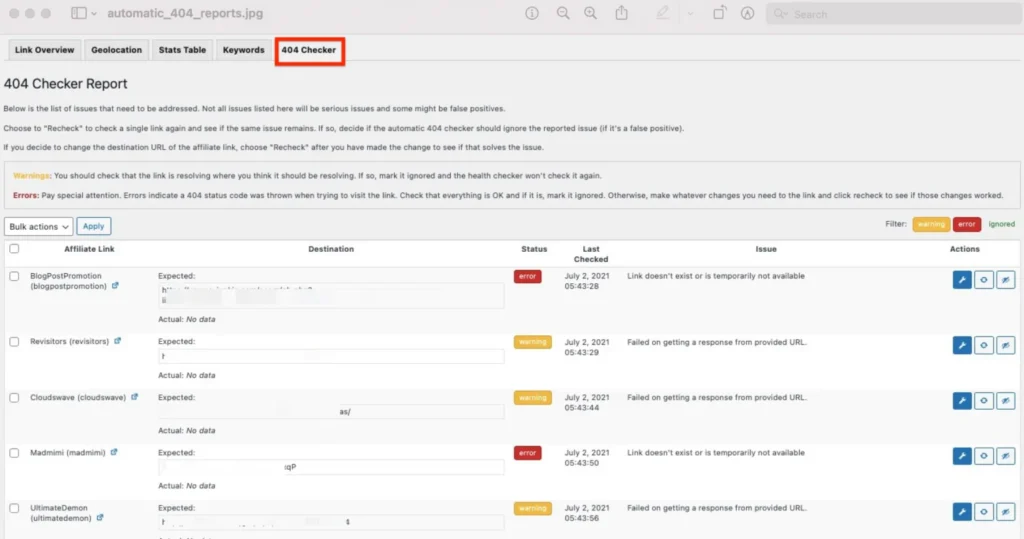
Then there’s the Automatic 404 Checker. I let ThirstyAffiliates monitor my links automatically so a merchant killing a product page or changing a URL doesn’t turn my best-converting review into a dead end I don’t notice for three weeks.
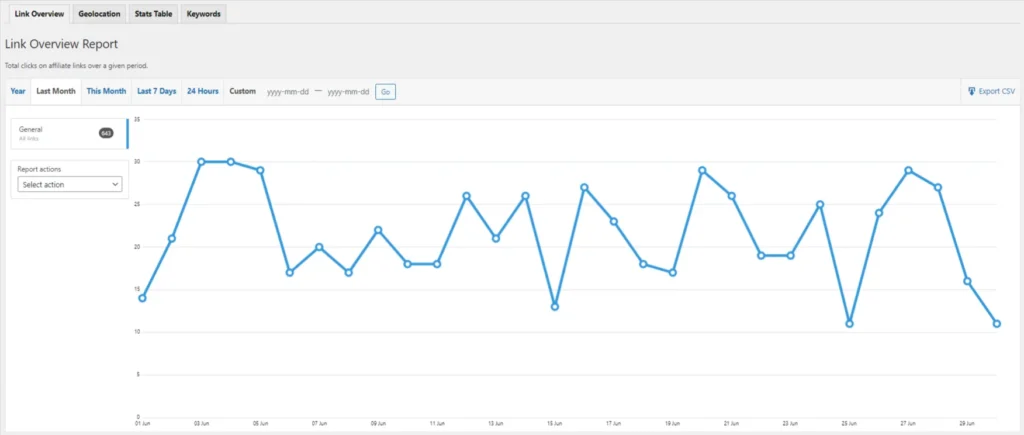
Tracking ties it together. The built-in click reporting tells me which of the fewer clicks I’m earning are the ones that convert, so I’m doubling down on evidence instead of guessing.
None of this is glamorous. But when you’ve accepted that you’re working with a smaller, higher-value stream of traffic, this is the difference between capturing what you earn and watching it leak out one broken, cluttered, or misrouted link at a time.
Conclusion
The affiliates who struggle over the next couple of years will be the ones still measuring themselves against their 2023 traffic charts, treating every lost session as a defeat and pouring energy into winning back volume that isn’t coming back in the same form.
The ones who do well will make a more useful adjustment. They’ll accept that AI search sends less people but sends better ones, build the segmented, genuinely useful content that earns a citation inside the answer, and manage their links tightly enough that not a single one of those hard-won, high-intent clicks leaks away.
The channel is still enormous and still growing, with US affiliate spending projected to reach $13.81 billion in 2026. The money didn’t leave. It just started arriving in more valuable clicks, and it’s rewarding the affiliates who treat each one like it matters.
That’s the mindset ThirstyAffiliates is built around: cloaking, 404 checker, and tracking working together so every click that reaches your site has the best possible chance of turning into a commission.
Get ThirstyAffiliates Today
How are you adjusting your affiliate strategy as AI search reshapes your traffic? I’d love to hear what’s working for you in the comments.





Leave a Reply
You must be logged in to post a comment.